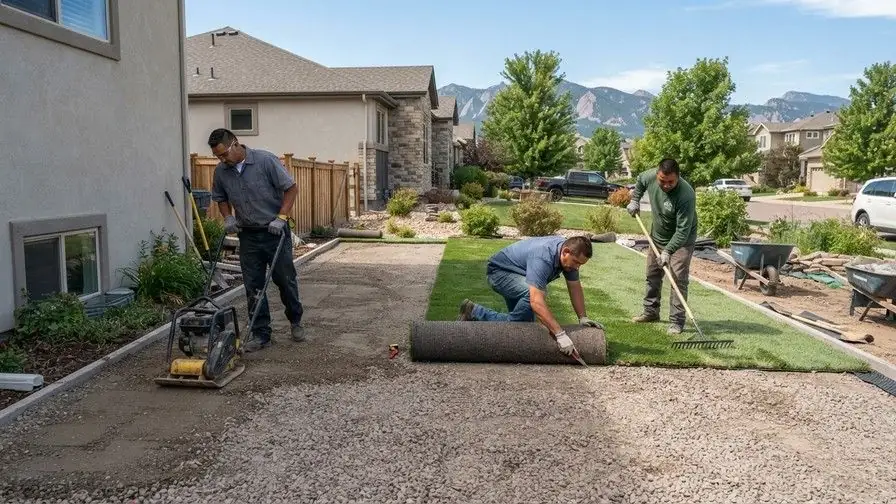
When people compare turf quotes, they tend to focus on the turf. The base matters just as much, and it is where cheap quotes often cut corners. Here is why base work deserves your attention on any Lakewood turf project.
What does the base under turf actually do?
Everything about how turf performs over time traces back to the base: whether water drains, whether the surface stays flat and whether it ripples or sinks. Doing it right means digging deep enough, packing crushed rock or road base down in several lifts and pitching it so water flows away from the house. Cutting corners here tends to come back as puddles, low spots and wrinkles, and repairs cost more than doing it right once. Ask every provider how many lifts they compact and with what machine.
Drainage Starts Below
Water goes through the turf backing into the base. If the base is too thin or full of fine soil, water hangs around. A clean, compacted crushed rock base gives it somewhere to go.
Clay soil, common along the Front Range, makes this even more important.
Staying Level
Compacting in layers stops settling. A base that was dumped and raked without real compaction can sink unevenly and leave dips that show through the turf.
Find out how many compacted layers the provider builds, and with which tools.
Catching Base Problems Later
On aging turf, ripples, spongy areas and standing water usually start in the base. The fix is often to pull the turf up, repair the base underneath, then put the turf back.
A base built right the first time saves you that extra cost.
Build It Right
A solid base is what makes a turf lawn last. For a quote that spells out the base work, we can match you to an independent area turf provider serving Lakewood.