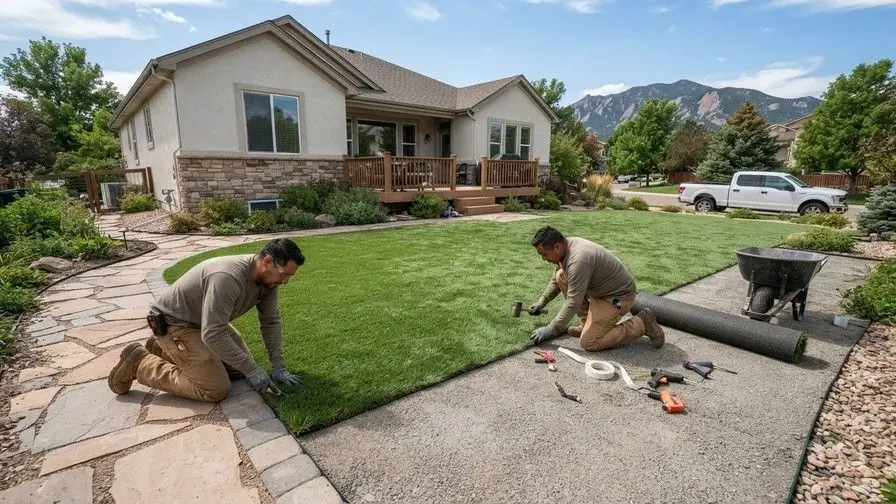
Dogs are tough on lawns, so plenty of Lakewood pet owners look at turf. A pet install looks a lot like a regular one, with a few key differences that affect the price. Here is what goes into it.
How does pet turf differ from regular turf?
A dog install is designed for drainage and easy cleanup first. Many use a backing that lets liquid through across its whole surface, a crushed rock layer that drains quickly and an infill that fights smells. Tightly anchored edges stop dogs from tugging the borders loose, and a nearby spigot makes hosing down simple. Watch where your dog really runs and does its business. That shows you where pet-grade materials are worth the money and where cheaper standard turf is fine. A bit of shade also keeps the surface cooler for paws.
Backing and Base
Pet turf often has a backing that lets liquid through across the whole surface instead of through small punched holes. Below it, a clean crushed rock base lets urine and rinse water drain down and away.
In clay soil, the base may go deeper so liquid does not sit right under the surface.
Infill and Edges
Coated or antimicrobial infill is a common pick for pet areas, since it rinses clean and resists odor. Edges get extra care. Dogs that dig or tug at corners can lift turf that is not fastened well, so borders are often fastened more tightly or set against stone or concrete.
Some owners add a buried barrier along fences where dogs dig.
Planning for Your Dog
Watch where your dog runs, rests and goes. Put pet-grade turf in those spots and standard turf elsewhere to balance cost. Put a hose bib or rinse station nearby so cleanup is easy.
A shady corner keeps the turf cooler for paws on summer days.
Turf Built for Dogs
Done with dogs in mind, a pet install keeps turf clean and comfortable for years. Once you are ready, we can put you in touch with an independent area turf provider who covers Lakewood.