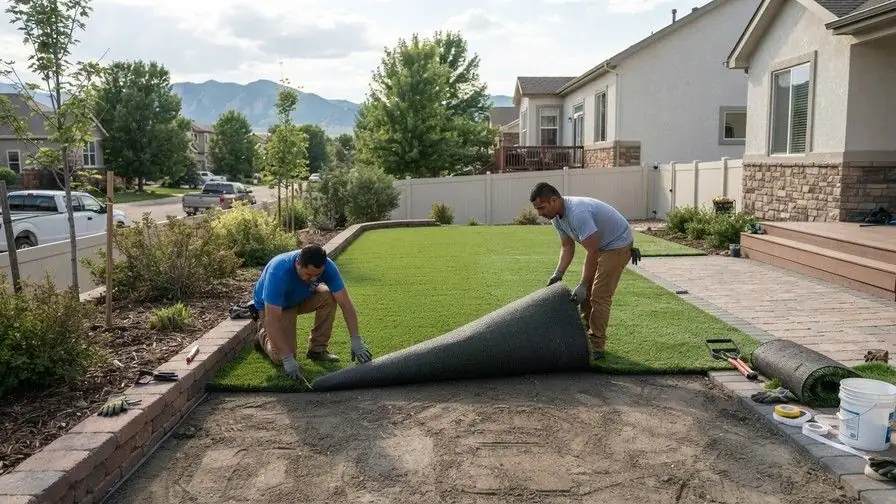
A play yard sees more use than almost anywhere else on the property. That is why Lakewood families often turf it first. Before you call anyone, think about how the space gets used. This checklist covers the questions that matter most for how a play area feels, how long it lasts and what you will spend.
Before astroturf goes into a play yard, what should I check?
Four things: fall zones, drainage, heat and edges. Put foam padding beneath anything kids climb, swing or slide on. Make sure the rock layer underneath lets water escape, so the yard is usable again soon after a storm. Picture the afternoon sun on that spot and decide how you will keep the surface comfortable. Last, find out what holds the turf down along its borders, so no edge can curl up and trip a child. Sorting these out early is cheaper than fixing them later. A local provider can cover each point at the estimate visit.
Begin With the Fall Zones
Walk the play area and mark every spot a child could fall: under swings, at the bottom of a slide, around a climbing frame and next to a trampoline. That is where padding goes. Foam or rubber pads sit under the turf and soften it without changing how it looks.
Measure how tall each piece of equipment is. Taller gear usually needs a thicker pad. If you plan to move or add equipment later, say so now so the padded area covers the future layout. Adding padding during the install costs far less than lifting turf afterward.
Plan for Storms and Snowmelt
Kids wear the grass off under a swing, and bare soil there goes soupy after every rain since the water is trapped. Turf solves it only when what sits below it drains. Find out how thick the crushed rock layer will be and which direction the yard will be pitched. Water should flow off toward the edges, never collect in the center where kids play or run back toward the house.
Check downspouts and where snow slides off the roof. Those spots dump a lot of water at once. A provider may suggest a downspout extension, a gravel strip or a grade change so the play area stays usable after a storm.
Think About Summer Heat
Synthetic turf heats up in strong sun, and kids often play in the afternoon when the sun is highest. Shade from a tree, sail or pergola helps a lot. So does a quick hose-down before the kids head out.
Infill matters too. Certain infills are designed to run cooler than plain sand or crumb rubber, and paler colors bounce back more heat. Find out which ones the provider puts in play areas, and ask to feel a sample that has been out in the sun for a while.
A Quick Recap
Pad wherever kids might fall. Make sure water drains down through the base. Plan for hot afternoons. Confirm how the edges are fastened. Take care of those four and you get an even, tidy play surface that will last through many seasons of games. Once you are ready to move forward, we can put you in touch with an independent Lakewood provider.