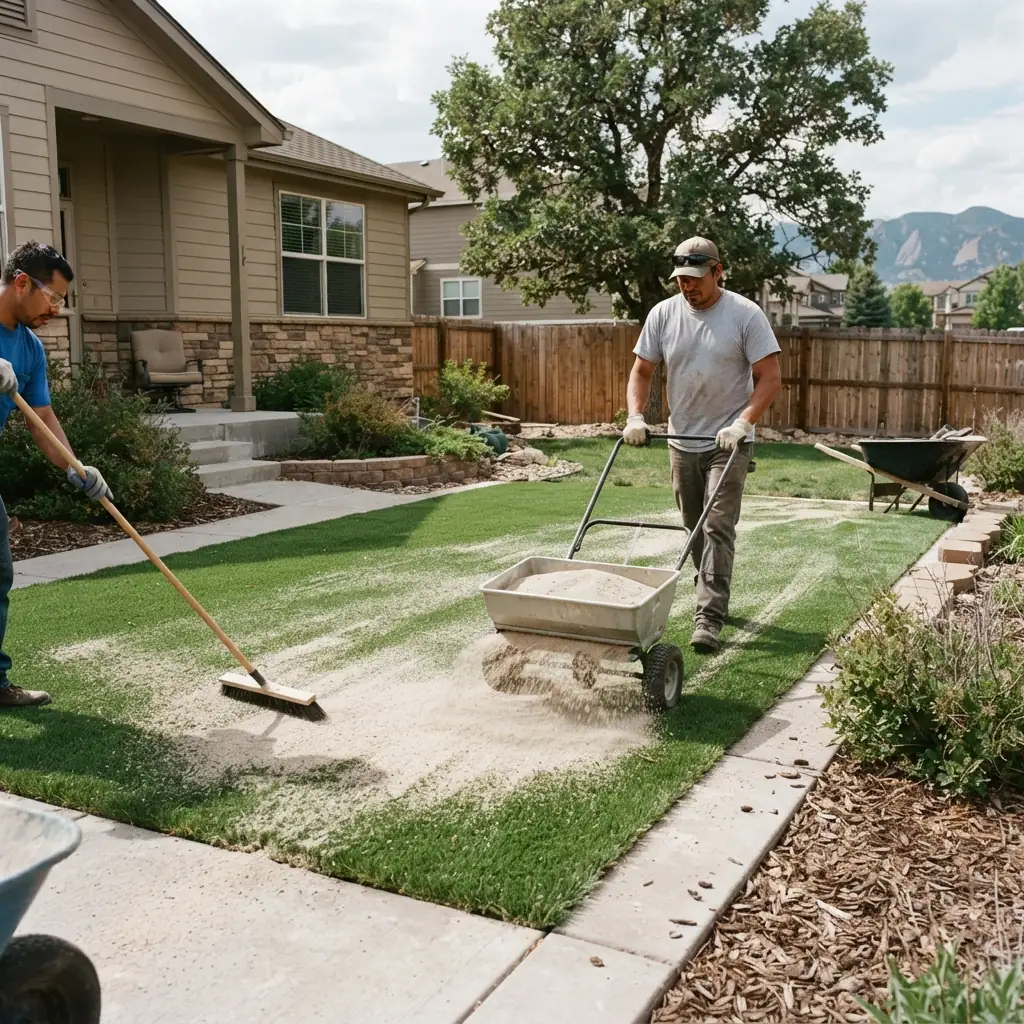
Most people ignore infill until their turf looks flat. But that layer between the blades works hard. It keeps the turf heavy enough to stay in place, helps fibers bounce back after foot traffic and can help control odor where pets go. We connect Lakewood homeowners to an independent area turf provider who can check your infill and refresh it.
What Infill Does
Think of infill as ballast. Worked into the fibers, it holds the turf down so edges and seams stay put. It also props each blade up from below, so the surface springs back after it is walked on and traffic paths do not form.
Some infills do more. Coated sands resist clumping and are a common pick for pet areas. Cooling infills hold a bit of moisture and can make the surface more comfortable in full sun. Pick based on how the yard gets used.
How to Tell Infill Is Running Low
Check a few spots around the lawn. If the backing shows between blades, or fibers stay flat even after brushing, the infill has probably thinned. Hard spots underfoot and seams that show more than they used to are other clues.
Infill shifts most where water drains hard, along slopes and where dogs run or dig. A provider can check depth across the lawn and tell you how much to add, instead of guessing.
Picking an Infill Type
Plain silica sand is the cheaper, common pick for lawns that see little traffic. Coated sand has a slick, rounded surface that drains freely and fights bacteria, so a lot of dog owners go that way. Infills made from organic material or with cooling properties work well for play spaces and patios that bake in the sun.
Ask the provider which infill your turf was built for. Some products work best with a specific type and depth. Mixing materials that do not go together can hurt drainage.
Book an Infill Check
Tell us where the turf is, how it gets used and whether infill has been added since the install. We hand it to an independent area turf provider serving Lakewood. They will check the lawn and quote the work.