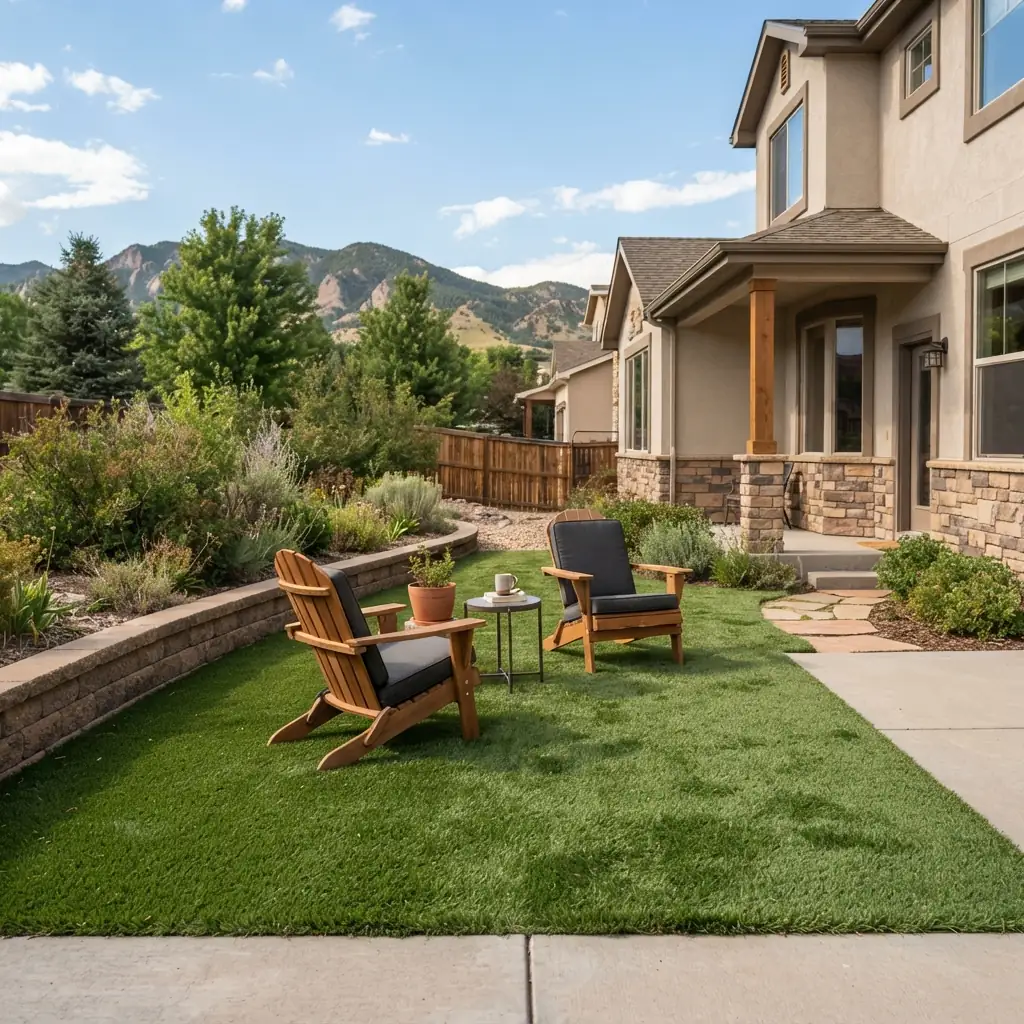
Bare concrete is hard and gets hot. Artificial grass over it makes the space friendlier for kids, pets and patio furniture, and the slab stays put. We connect Lakewood homeowners to an independent area turf provider who does turf over concrete.
Look at the Slab Before Anything Else
Turf takes the shape of whatever is under it. So the concrete has to be in decent condition. Big cracks, heaved sections and low spots that hold water will show through. A provider will look for those and may suggest grinding, patching or leveling compound first.
They will also check how the slab drains. Most patios slope a little away from the house. The turf system has to keep that path clear so rain and snowmelt can run off.
Padding and Drainage
A foam underlay adds cushion, so it feels more like lawn and less like sidewalk. Some pads have channels underneath that move water toward the slab edge. Skip the pad and turf on concrete can feel thin and stay damp below.
Concrete installs often use less infill. The provider will suggest enough to keep blades upright without washing off the edges.
Securing the Edges
On concrete, turf is usually held down with outdoor adhesive or heavy tape along the edges and seams. Where the patio meets a lawn or bed, the edge can be tucked or trimmed out. Steps and thresholds need precise cuts so the turf does not become a tripping hazard.
Leave clearance at doors so they still swing freely once the pad and turf are down.
Plan Turf Over Concrete
Tell us how big the patio or slab is, what shape it is in and what you want to use it for. An independent area turf provider who covers Lakewood gets those details, comes out and prices the job.